
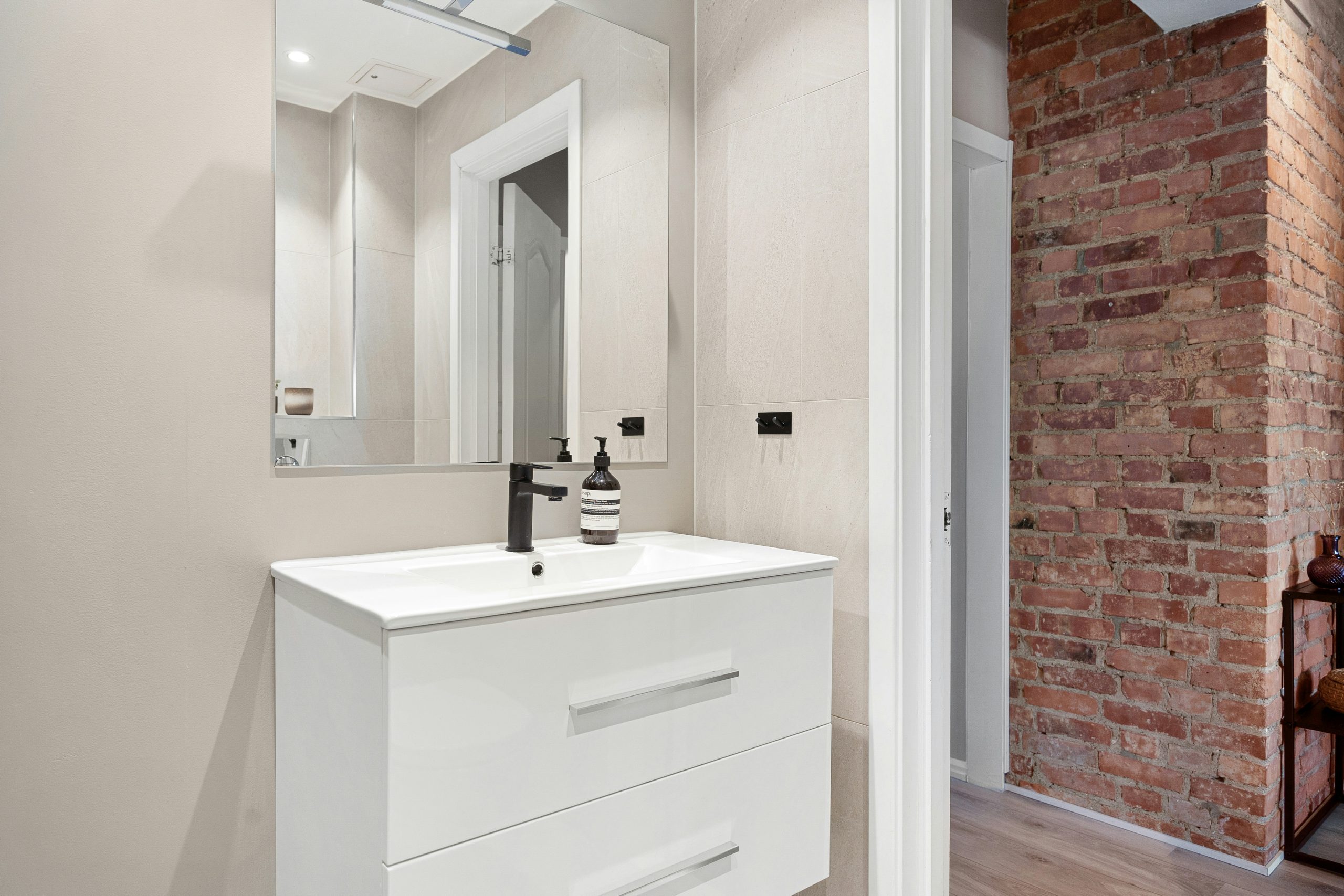
Painted white vanities are the safe choice that can still go wrong. They brighten the room, pair easily with tile and stone, and feel timeless in photos. But in real bathrooms, painted finishes are exposed to a tough mix of humidity swings, heat, splashes, and daily wear. That is why homeowners often notice issues that do not show up in a showroom: hairline cracks at door joints, faint seam lines that appear over time, or edges that start to look rough and swollen near the sink.
In markets with heavy remodel activity like bathroom vanities Atlanta searches often suggest, shoppers compare materials quickly and run into the same debate: is “solid wood” actually better, or is MDF the smarter choice for painted doors. The answer is not a simple winner. Painted doors behave differently than stained wood doors, and the best substrate for paint is not always the most premium sounding material.
Why painted doors show problems sooner than stained wood. Paint is a surface film. It sits on top of the substrate and reflects light evenly, which is exactly why it looks clean and bright. That same uniformity is also why it reveals movement and stress. Small changes that would be invisible on a stained wood surface can become noticeable on paint.
Solid wood naturally expands and contracts with humidity. In a bathroom, humidity can spike during showers and drop as the fan runs and the room cools. Wood responds by moving, and that movement concentrates at joints and seams. Over time, painted doors made from wood components may show hairline cracks at corners, especially in traditional frame-and-panel styles. The door is still functional, but the finish starts to tell the story of the environment.
Painted surfaces also show micro-dents, scuffs, and edge wear more clearly than stained wood. When a painted edge is chipped, moisture can enter the substrate more easily, especially if the core is fiber-based. That is why painted vanities often look more “high maintenance” than they should, even when the
construction is decent.
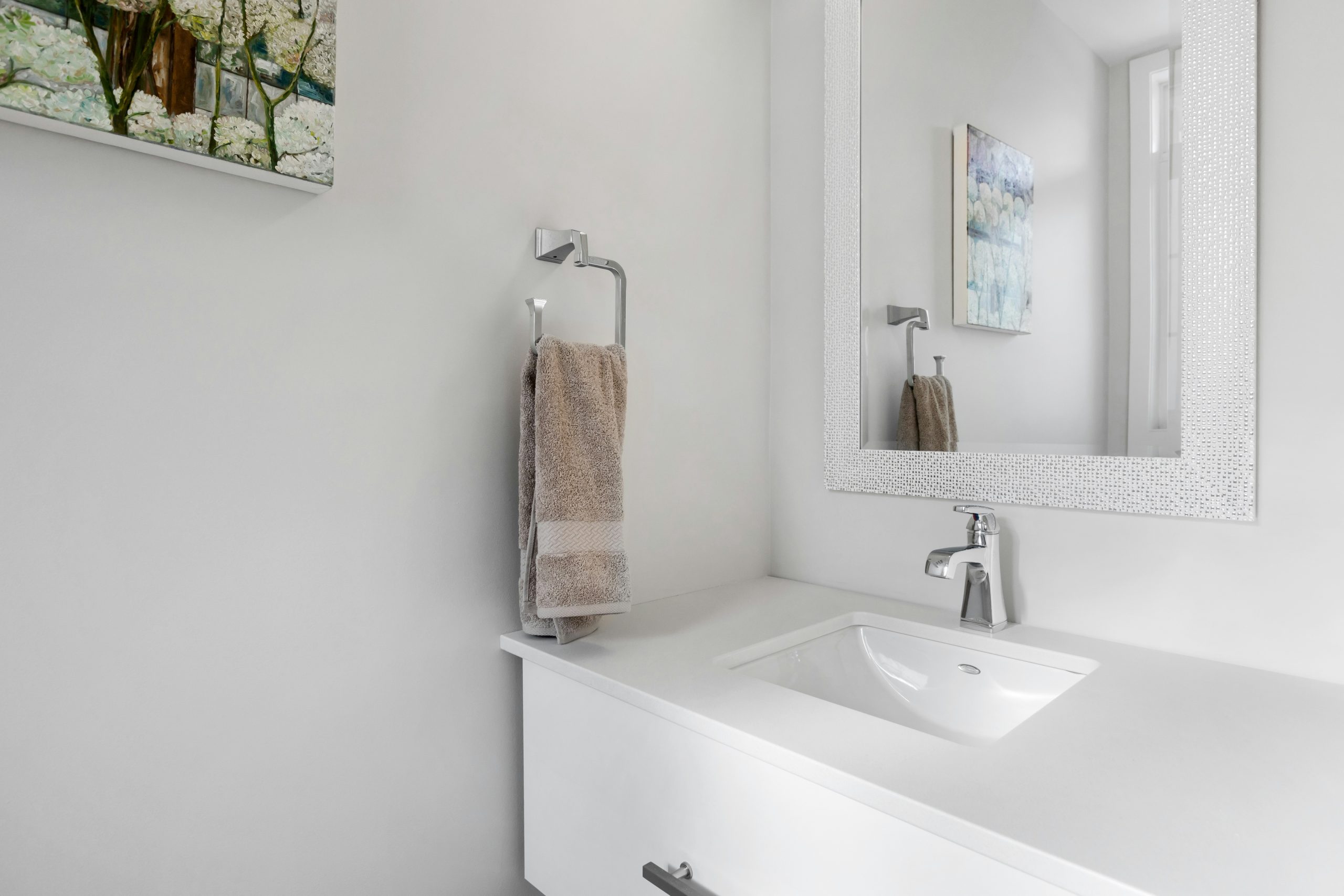
Another factor is light. Bathrooms have mirrors, glossy surfaces, and direct task lighting. Those conditions highlight any slight unevenness in a painted finish. A tiny seam line that would be ignored in a living room cabinet becomes obvious in a bathroom under bright lighting.
Why MDF is often used for painted doors and where it truly wins. MDF, or medium-density fiberboard, is engineered from wood fibers and resin pressed into dense panels. It does not have grain, knots, or natural variation. For paint, that is a major advantage. MDF provides a smooth, consistent surface that accepts paint evenly and reduces the risk of grain telegraphing through the finish.
The biggest reason MDF works well for painted door panels is stability. MDF does not expand and contract the same way solid wood does. It is less reactive to humidity changes in terms of dimensional movement. That stability helps a painted surface stay visually cleaner over time. It can reduce the chance of hairline cracks or seam lines becoming visible, particularly in doors that use a wood frame with a flat center panel.
MDF also allows crisp detailing. Routed profiles, clean edges, and consistent panel thickness are easier to manufacture with MDF. That is why many “paint grade” cabinet doors use MDF panels, even in higher-end cabinetry. The goal is not to cheap out. The goal is to create a painted surface that stays smooth and consistent.
In practical terms, MDF is often a good choice for the center panel of a door, while the frame may still be solid wood. This hybrid construction takes advantage of each material: the frame provides structure and screw holding, while the MDF panel stays stable and smooth under paint.
Where MDF loses in a bathroom, and why edges are the weak point. MDF’s weakness is liquid water exposure, especially at edges. MDF can swell when water penetrates the surface and reaches the core. Once it swells, it rarely returns to its original shape. It can become permanently puffy, soft, or uneven.
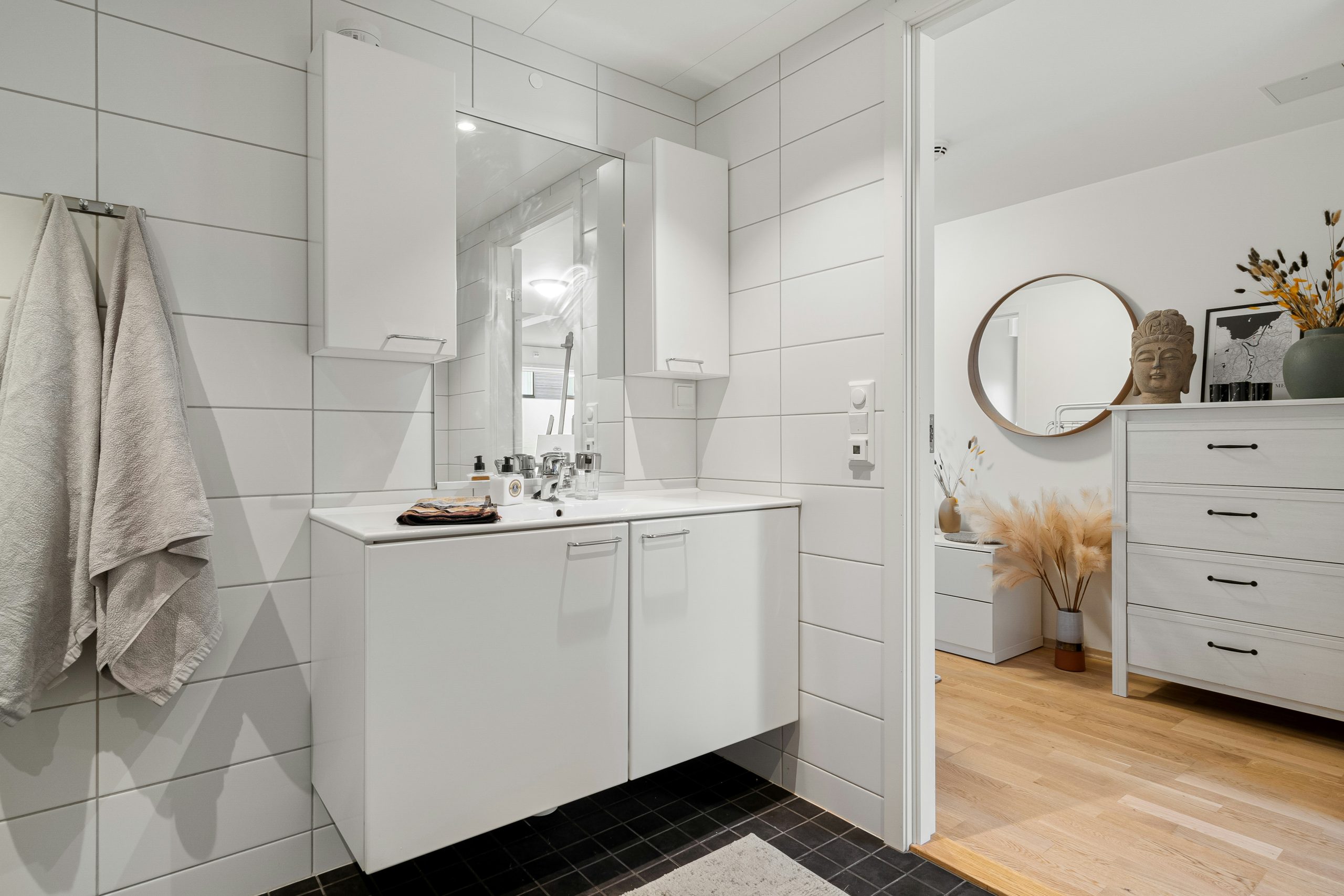
This usually happens when the protective coating is compromised. A chip at the bottom edge of a door, a seam that was not sealed well, or repeated splashes that sit and soak at the same spot can all create a pathway for moisture. Bathrooms encourage this kind of wear because the sink area is constantly wet, and towels or hands often touch cabinet fronts.
Edges and corners are the danger zone. Flat faces might stay perfect, but bottom edges of doors, corners near the sink, and toe-kick areas are where water and cleaning contact are most intense. When MDF fails, it often starts there.
MDF is also vulnerable to slow leaks. Water inside the cabinet, especially under the sink, can damage MDF bottom panels or structural components without being visible right away. This is one reason some well-built vanities use plywood for cabinet boxes and reserve MDF for door panels where it is less exposed to hidden water.
How to read “paint grade” and decode what doors are really made of. Many product listings use phrases like paint grade, engineered wood, hardwood, or solid wood construction. These terms can be technically accurate while still being vague. Understanding what to look for helps avoid surprises.
Paint grade usually means the door surface is designed to be painted smoothly. That often points to MDF panels or a combination of MDF and wood. It can be a sign of quality if it is paired with a durable finish system and proper sealing.Engineered wood is a broad term. It can mean plywood, MDF, particleboard, or a combination. The performance difference between those materials can be significant, so a listing that says engineered wood without specifics is not very helpful.
Hardwood is also commonly misread. It might refer to the door frame, the face frame, or a portion of the construction. It does not automatically mean the cabinet box is hardwood.
The most reliable descriptions specify components: door frames, door panels, cabinet sides, cabinet bottom, drawer boxes. When a product description lists those clearly, it is easier to judge whether the construction choices make sense for a bathroom.
If a listing emphasizes solid wood doors but does not describe the cabinet box, it is worth slowing down. The cabinet box is what lives under the sink and takes the most exposure risk. Doors matter visually, but the box determines longevity.
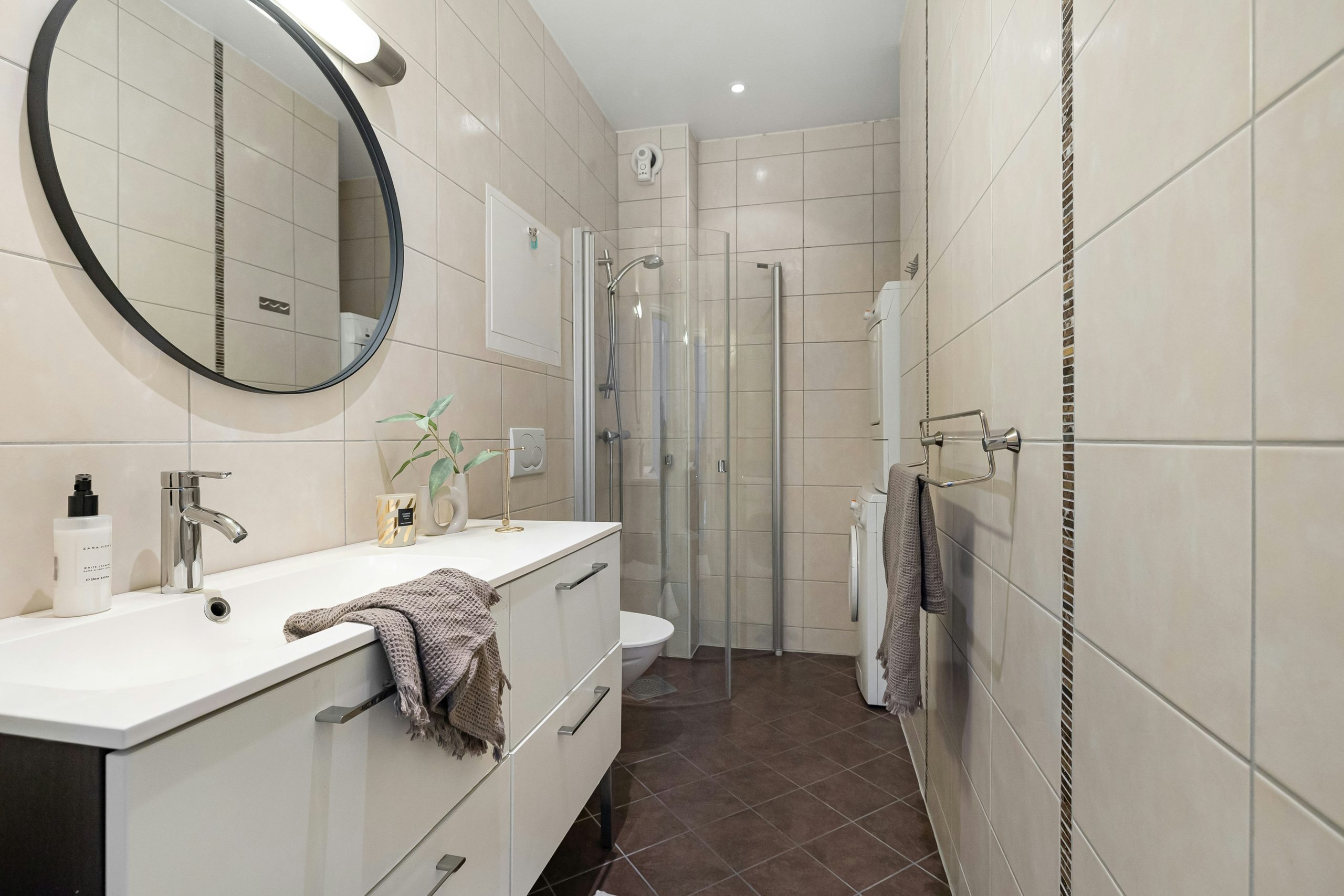
When solid wood is a bad idea for painted doors. Solid wood can be an excellent material, but painted solid wood doors carry specific risks in bathrooms. The main issue is movement. Solid wood panels can expand, contract, and sometimes cup or twist. Even slight movement can stress a painted surface and create visible seam lines or cracking.
This is most noticeable with wide solid wood panels. A large slab-style solid wood door under paint can be more likely to show movement-related issues than a door with a stable center panel. Frame-and-panel construction helps, but if all components are solid wood, seasonal changes can still show up in the finish.
Solid wood also has natural variation. Grain patterns can telegraph through paint over time, especially if the finish system is thin or the primer was not designed to block grain. Some people do not mind this. Others want a perfectly smooth, furniture-like painted surface. MDF is often better at delivering that look consistently.
The most reliable painted doors tend to be built with stability in mind, not purity. That is why a hybrid door with wood frame and MDF panel is so common in cabinetry that aims to look smooth for years.
Practical care: keeping painted white doors looking clean without destroying edges. A painted white vanity can stay beautiful, but the care approach matters. Many finishes fail faster because of aggressive cleaning habits, not because of the material choice alone.
Harsh chemicals, abrasive sponges, and repeated scrubbing at edges can wear down the protective topcoat. Once that topcoat is compromised, moisture has an easier route into seams and corners. That is especially risky with MDF panels and MDF components near the sink.
A safer routine focuses on gentle cleaning and immediate drying. Painted finishes do not need heavy-duty chemicals for everyday maintenance. Most grime in bathrooms is a mix of soap residue, hand oils, and product overspray. That can usually be removed with mild cleaner and a soft cloth.
Here is a practical care routine that reduces edge damage over time.
1. Wipe splashes quickly, especially along the bottom edge of doors and around handles where water and oils collect
2. Use a soft microfiber cloth and a mild cleaner instead of abrasive pads or powders
3. Dry the surface after cleaning to prevent water from sitting at seams and corners
4. Avoid spraying cleaner directly onto cabinet edges; spray onto the cloth to reduce seepage into seams
5. Watch for early chips or nicks and touch them up promptly to seal the substrate
6. Run bathroom ventilation longer after showers so humidity does not linger around cabinet joints
7. Keep wet towels from hanging against door fronts and avoid leaving damp mats pressed against the toe-kick area
8. Check under the sink periodically for small leaks or condensation that can damage cabinet bottoms unnoticed
The bottom line for 2026 buyers. MDF is not automatically a downgrade, especially for painted doors. In many cases, MDF is used because it helps paint stay smooth and stable, reducing visible movement issues that can happen with solid wood under paint. The tradeoff is moisture vulnerability at edges and seams if the finish is damaged or if water exposure is chronic.
A well-performing painted vanity usually comes from smart construction choices: stable door panels, properly sealed edges, a durable finish system, and a bathroom environment that does not trap steam daily. The best decision is rarely about choosing one material as “the best.” It is about choosing the right materials in the right places, and then protecting the weak points that water will eventually find.