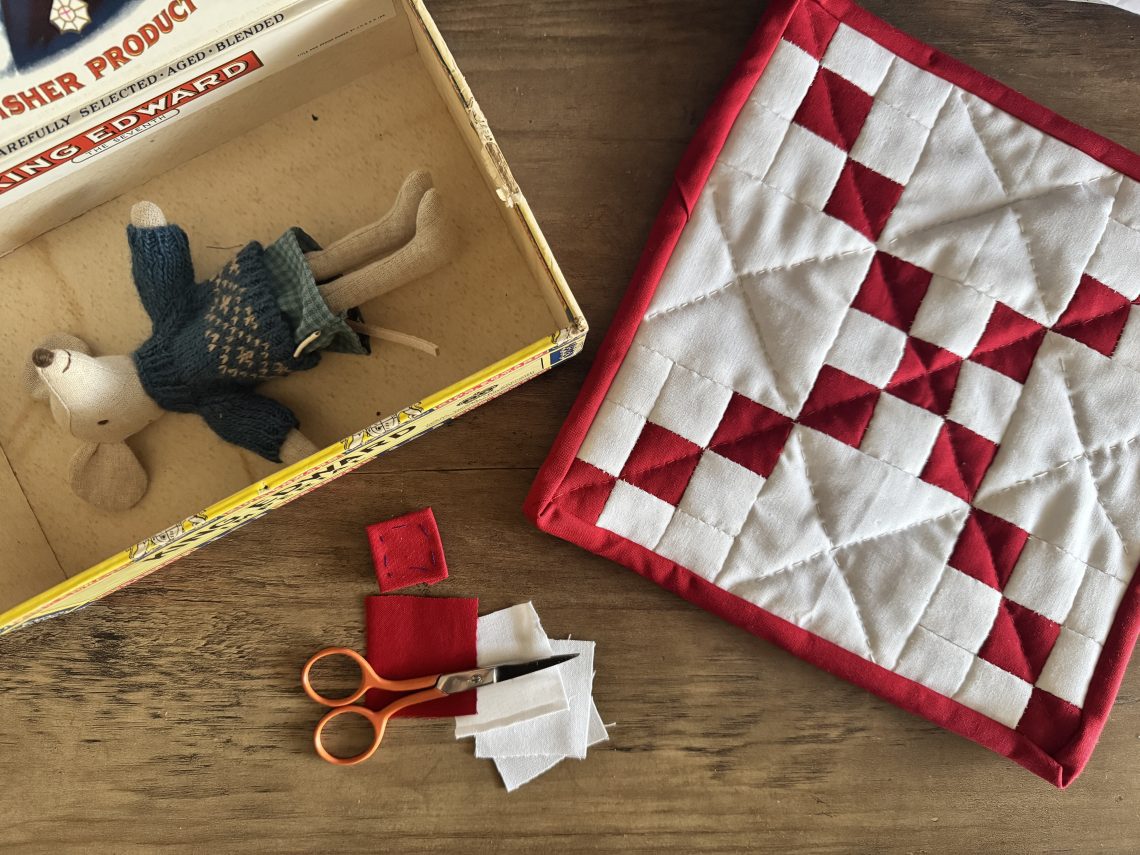
The Irish Chain block is a classic and much‑loved design in patchwork and quilting, admired for its elegant simplicity and striking visual impact. Thought to have originated in the early nineteenth century, the block is built around a repeating grid of squares that create the illusion of interlocking diagonal chains. This distinctive criss‑cross effect gives the pattern its name and makes it a favourite among quilters who enjoy strong geometric layouts. It’s a block I’ve wanted to try for a while, I even purchased red and white fat quarters when I visited the Knit & Stitch show.
What is an Irish Chain block?
Traditionally, the Irish Chain comes in one‑, two‑, or three‑chain variations. The single Irish Chain uses one set of diagonal pathways running across a light background, resulting in a clean, minimalist look. The double and triple versions add extra rows of squares between the chains, producing more complex patterns and a richer sense of movement. Although the design is straightforward, it lends itself beautifully to both bold contrast—such as dark chains on a pale ground—and to softer, scrappy approaches that use many small fabric pieces.
One of the reasons the Irish Chain block remains so enduring is its versatility. It can showcase a single favourite fabric, highlight a coordinated palette, or make use of leftover scraps in a structured yet playful way. The block’s grid‑based construction also makes it an excellent choice for beginners: it relies mainly on simple squares and strip‑piecing techniques, while still offering impressive, polished results.
Whether made in traditional Irish green tones or reimagined in contemporary colours, the Irish Chain block brings timeless charm to any quilt, creating a pattern that is both orderly and expressive.
How to sew an Irish Chain block by hand
Hand‑sewing an Irish Chain block is a wonderfully meditative process, and because the block is made of small squares arranged in a grid, it’s ideal for slow stitching.
What you’ll need:
Fabric in two contrasting colours (e.g. one light, one dark)
Needle and good quality hand‑sewing thread
Fabric pencil or marker
Scissors or rotary cutter
Ruler or square template
Iron
Make paper templates
I printed a grid of squares, using these as templates for each square.
Cut your squares
A simple single Irish Chain block is often made from 1½” or 2″ squares.
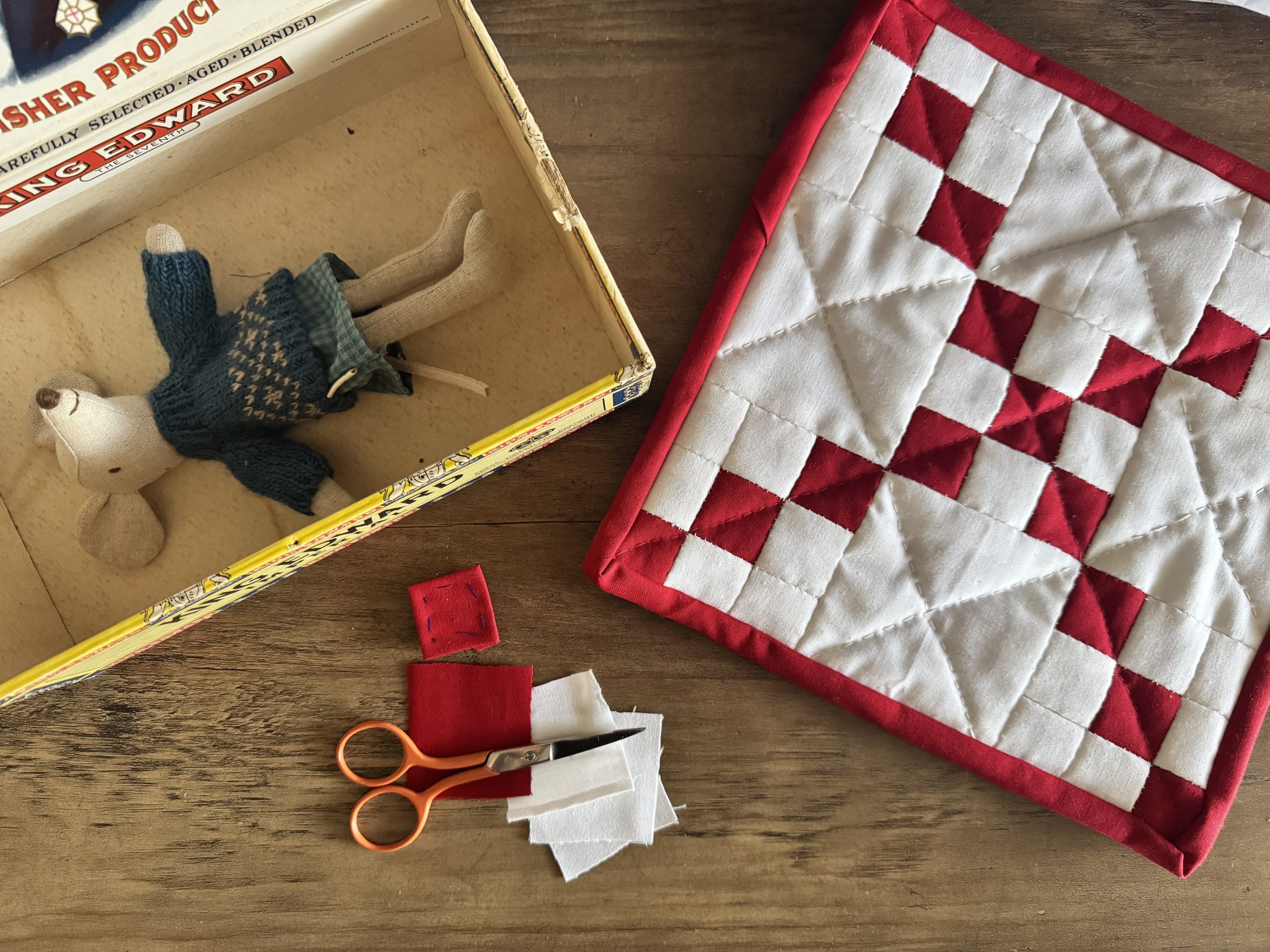
Cut: 17 red squares (these form the “chain”) and 28 small white squares for the background, 4 large squares. Baste each square using your preferred method.
Sew the squares into rows of three
Join squares one at a time until you have the central block: red/white/red for the first row; white/red/white for the second row; red/white/red for the third row. When you have the three rows hand stitch them together.
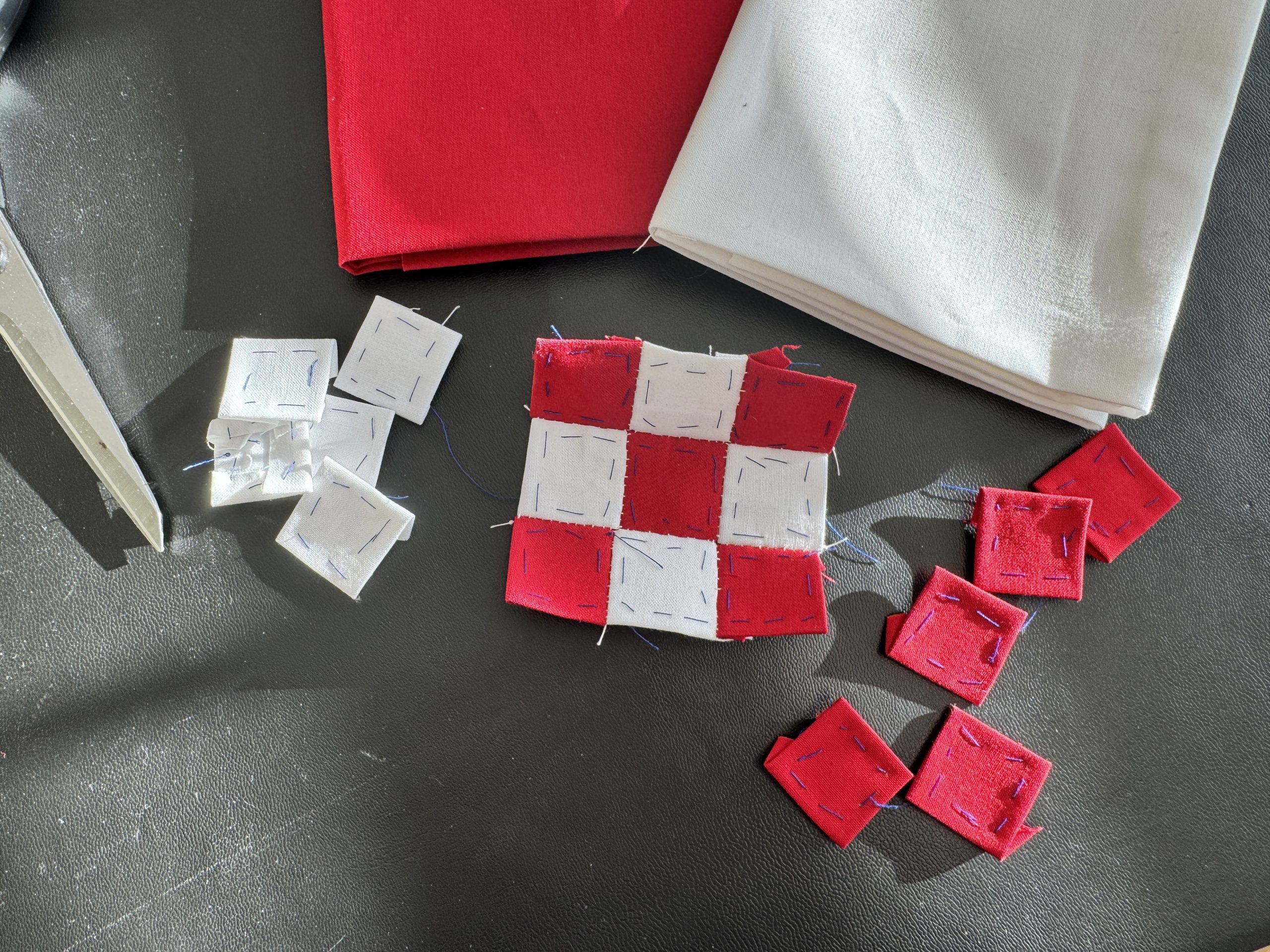
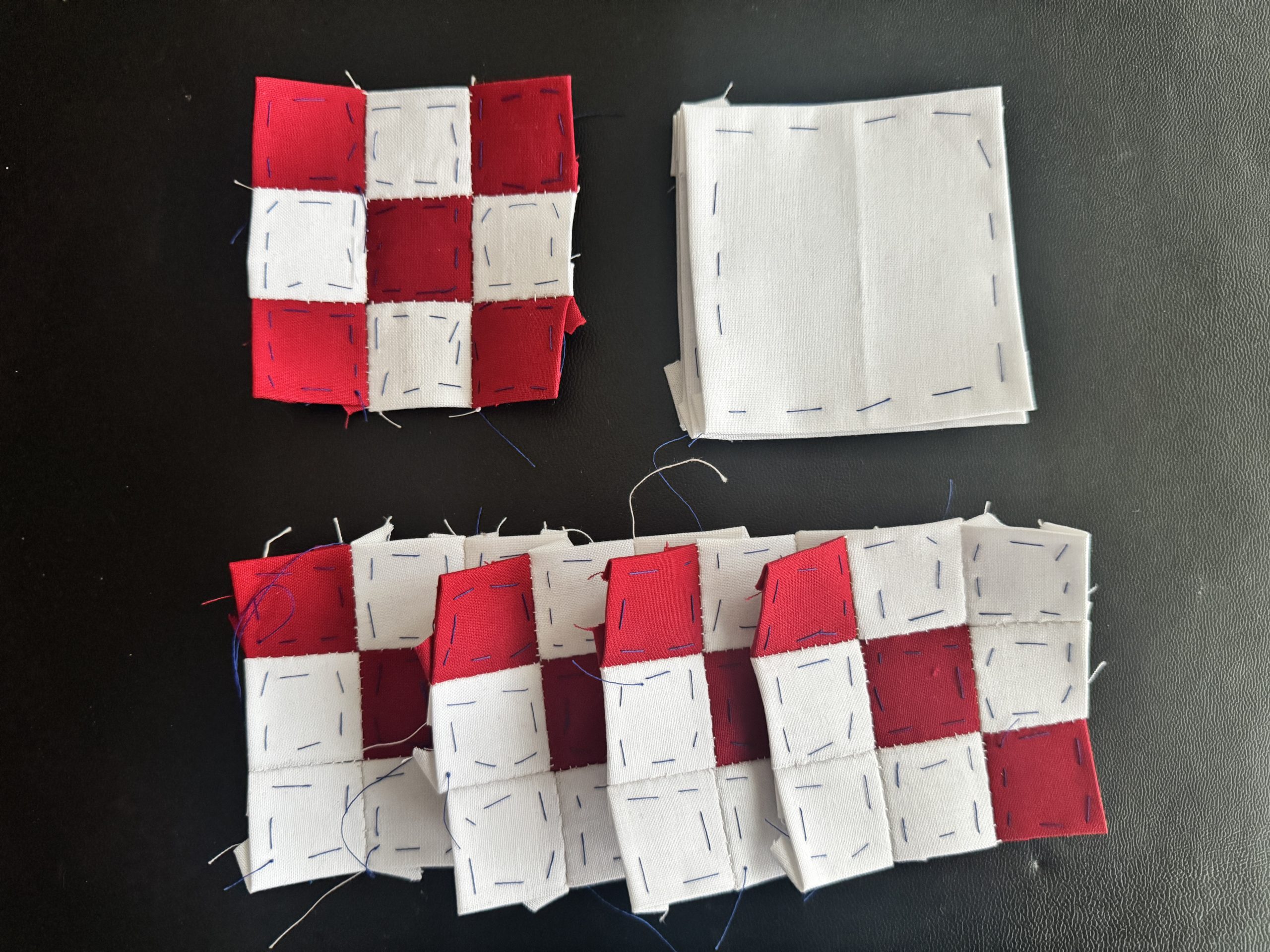
The second set of blocks will be red/white/white; white/red/white; white/white/red. Make 4 of these blocks.
Make 4 plain large white blocks.
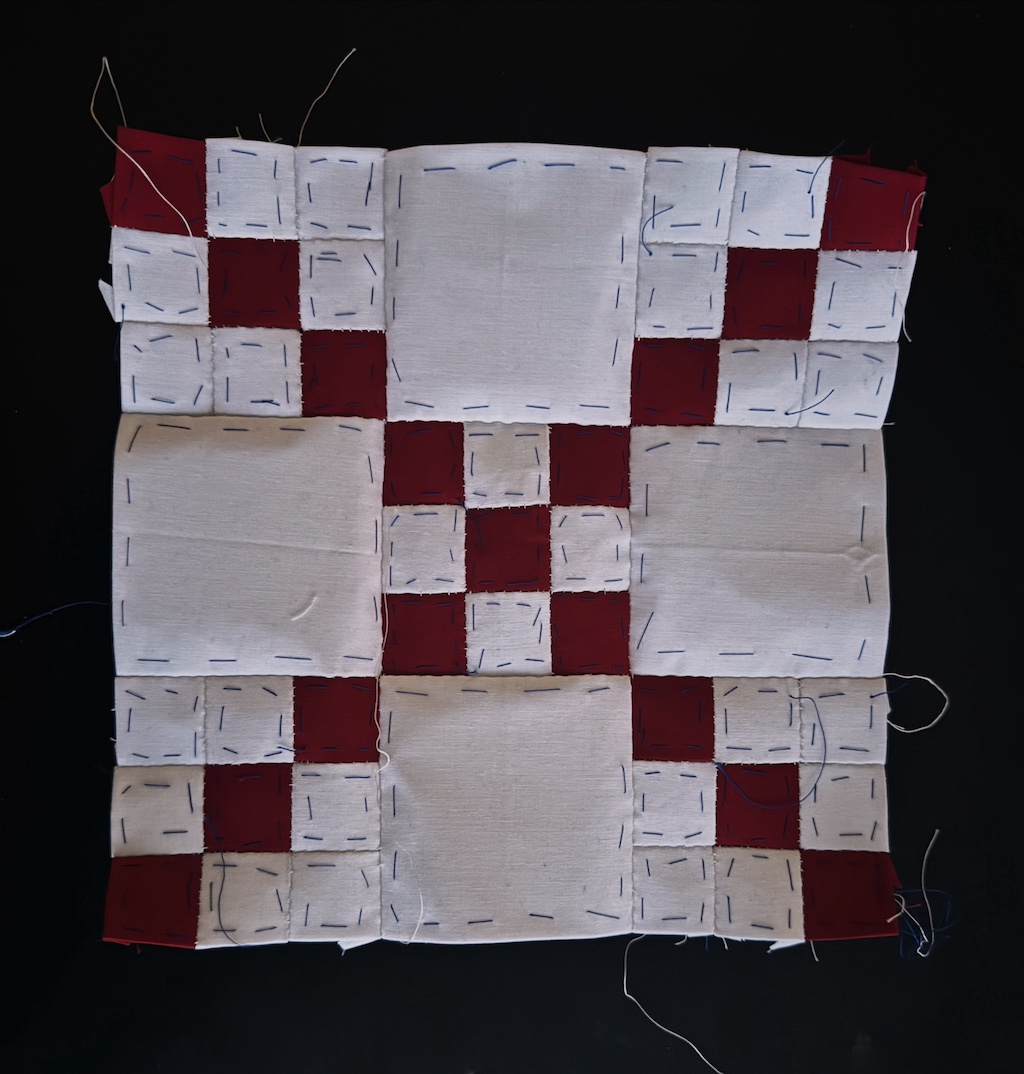
Hand stitch the blocks together so you have the chain radiating out from the central block. Press the seams and carefully remove your basting stitches and paper templates.
Layer your Irish Chain mini quilt
I used a thin wadding for the middle of my Irish Chain mini quilt and a coordinating piece of the red fabric for the back.
Hand quilt your Irish Chain mini quilt block
I used a favourite Aurifil thread to hand quilt the blocks, stitching diagonally from corner to corner. I hand quilted the large white squares, diagonally from each corner.
Bind your Irish Chain mini quilt block
Trim your backing fabric, wadding and Irish Chain mini quilt block and bind. I made my binding from the same red Moda fabric.
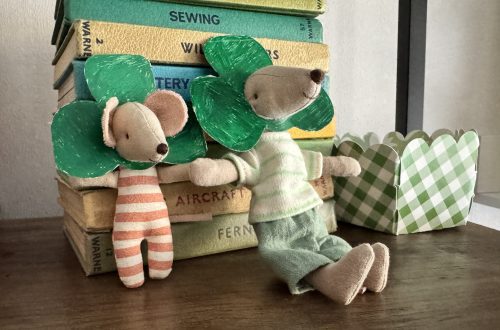
This was a fun project and I really like the finished look of my Irish Chain mini quilt block. It’s actually too large for the vintage Maileg doll bed I made it for but it’s a lovely addition to my little collection of doll quilts.


I love the simplicity of this block, so soothing to look at – and must have been fun to stitch too.
Yes, I would love to make a larger piece using these blocks someday.