
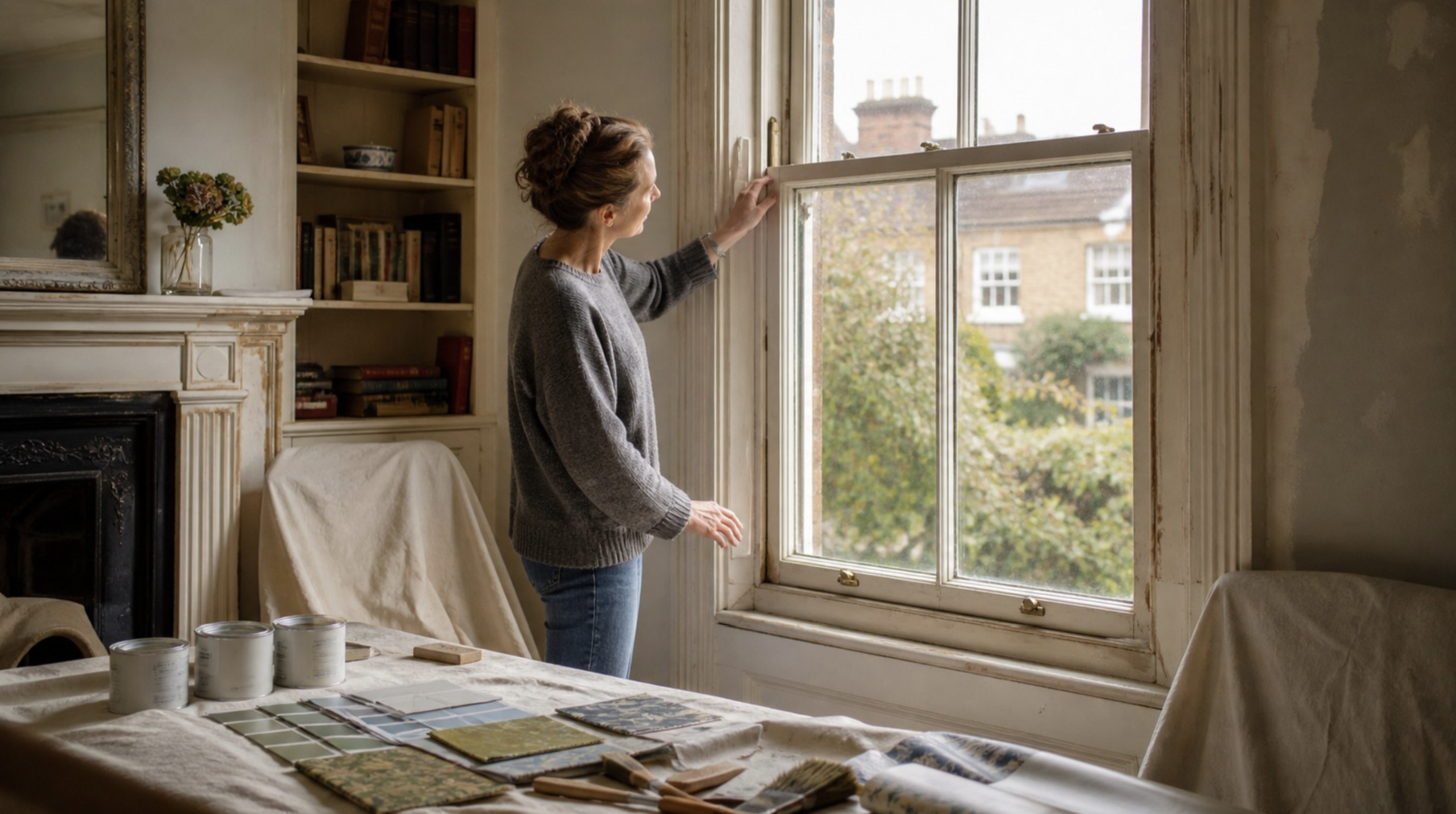
Before You Redecorate an Older Room, Check the Windows First
Redecorating an older room is one of those projects that feels wonderfully satisfying at the start. You choose new paint colours, look at fabric samples, save ideas for curtains, perhaps even plan a fresh layout for the furniture. In a family home, it can feel like a small reset: a colder bedroom becomes a cosy retreat, a tired living room becomes more welcoming, and a neglected spare room finally starts to earn its place.
But in older British homes, especially Victorian, Edwardian and Georgian properties, there is one feature that is easy to overlook until the work is already finished: the windows. Original timber windows are often part of the charm of the room, but they can also be the reason fresh paint does not last, new curtains do not solve the cold, and the finished space still feels a little uncomfortable.
If your room has sash windows, casement windows or original wooden frames, it is worth checking them before you start decorating. A previous guide on sash tweaks explains how small window improvements can help with bills and comfort. This article looks at the step before that: what to notice before the dust sheets go down and the decorating begins.
Why windows matter before decorating
It is natural to think of decorating as a surface job. Paint, wallpaper, shelves, curtains, flooring and accessories all change how a room looks. Yet the success of a room makeover often depends on what is happening underneath and around those surfaces.
Windows sit at the point where the outside world meets the room. They deal with rain, wind, changing temperatures, condensation, sunlight and daily use. In an older property, timber frames may have been repaired, repainted and adjusted many times over the decades. Some may still be in excellent condition. Others may look acceptable from a distance but have hidden gaps, softened timber, cracked putty or paint that is no longer properly protecting the wood.
If these issues are ignored, the room may look lovely for a few months but still feel draughty, noisy or damp around the edges. In some cases, moisture problems around the window can spoil new paintwork, stain curtains or make the room harder to keep warm.
The common mistake: decorating around the problem
One of the most common mistakes in older homes is treating the window as part of the background. The walls are repainted, the skirting boards are freshened up, new blinds are fitted, and the old window is simply wiped down and left as it is.
At first, this can seem sensible. If the window still opens and closes, why disturb it? But original timber windows often give early warning signs before they become a bigger issue. A sash that rattles in the wind, a frame that feels cold to the touch, flaking paint on the sill, blackened sealant or a musty smell around the reveal can all suggest that the window needs attention.
Decorating over these signs rarely solves them. It usually hides them for a short while. Once winter arrives, or once condensation builds up again, the same marks can return and the room may feel unfinished despite the money already spent.
Signs to look for before you start
Before choosing paint or ordering new curtains, spend a little time looking closely at the window. You do not need specialist equipment. You simply need a careful eye and a willingness to check the parts of the room that are normally ignored.
Look at the lower sections of the frame and sill first. This is where rainwater and condensation often cause the most trouble. If the timber feels soft, cracked or crumbly, it may need repair rather than another coat of paint. Peeling paint can also be a warning sign, especially if it returns quickly after previous decorating.
Then check for draughts. On a breezy day, stand close to the frame and notice whether cold air is coming through the meeting rails, pulley stiles, staff beads or around the sash. A little movement in an old sash window is normal, but noticeable rattling or cold air can make a room feel uncomfortable even when the heating is on.
Condensation is another clue. A small amount of condensation on cold mornings can happen in many homes, but regular moisture pooling on timber, mould around the edges or staining on the wall nearby should not be ignored. It may indicate poor ventilation, cold glass, failed paint protection or gaps that allow cold air to meet warm indoor air.
When simple decorating is enough
Not every old window needs major work. Sometimes the timber is sound, the sashes move well and the main issue is tired paint. In that case, careful preparation and repainting may be enough to protect the wood and improve the look of the room.
A good decorating job around timber windows is rarely just a quick topcoat. Old loose paint should be removed, bare timber should be properly primed, cracks should be filled with suitable materials, and the finish should protect the frame from moisture. If the window is in good condition, this kind of work can make a big difference.
It is also worth thinking about the rest of the room. Lined curtains, a well-positioned radiator, rugs on bare floors and thoughtful furniture placement can all help an older space feel warmer. But these finishing touches work best when the window itself is not letting in draughts or holding moisture.
When the window needs repair before decoration
If there is rotten timber, loose joints, broken cords, failed putty, damaged glazing or a sash that is painted shut, it is usually better to deal with the window before the rest of the room is finished. This avoids damaging fresh paintwork later and gives you a better foundation for the whole makeover.
For homes with original timber windows, a specialist assessment can be useful at this stage. A company such as Chameleon Windows Restoration can help homeowners understand whether the existing frames can be repaired, draught-proofed, reglazed or restored before decoration begins. This is particularly helpful in period homes where replacing the windows may not be the best first option.
Many people assume that an old wooden window is either “fine” or “needs replacing”. In reality, there are several stages in between. A rotten section of sill may be repaired with new timber. A rattling sash may need draught-proofing. A stuck window may need careful release and adjustment. A tired frame may need decoration after repair, not before it.
This is why checking the windows early can save both stress and money. It helps you avoid paying for a beautiful room finish, only to discover that window repairs are needed afterwards.
Original windows can often be part of the finished look
One of the nicest things about older homes is that the original details give each room a sense of character. A restored timber sash window, with clean lines, working cords and a neat painted finish, can look far better in a period room than a modern replacement that does not quite suit the proportions of the house.
Original windows are also part of the story of the building. Their glass, timber profiles, mouldings and opening style all contribute to the architecture. When they are repaired properly, they can sit comfortably alongside modern decoration, family life and improved energy performance.
This does not mean every window must be preserved at all costs. Sometimes replacement may be necessary if a window is beyond practical repair, badly altered or structurally unsound. But many timber windows are more repairable than homeowners first realise. Before committing to replacement, it is sensible to compare the options.
Think about comfort, not just appearance
A room can look beautiful in photographs and still be unpleasant to sit in. This is especially true in winter, when draughts, cold glass and traffic noise become more noticeable. If you are redecorating a bedroom, nursery, living room or home office, comfort matters as much as colour.
Draught-proofing can reduce cold air movement around sash windows. Repairing gaps and loose sections can make the room feel quieter and more settled. In some homes, upgrading the glass may also be worth discussing, especially where the original windows are suitable for slim-profile double glazing or other sensitive glazing options.
The right solution depends on the condition of the window, the age of the property, the budget and any planning considerations. Listed buildings and homes in conservation areas may need a more careful approach, and requirements can vary depending on the local authority. That is another reason to ask questions early rather than after the room is finished.
What to ask before you order materials
Before buying paint, blinds or curtains, ask a few practical questions. Does the window open and close properly? Is there any soft timber? Are there draughts around the sash or frame? Has the paint failed in the same place before? Is there condensation damage near the glass or sill? Are the cords, locks and catches working as they should?
If the answer to most of these is yes, you can move forward with more confidence. If several answers are no, it may be better to pause the decorating plan and deal with the window first.
It is also useful to think about the order of work. Window repair, draught-proofing and repainting can create dust and require access around the frame. If new curtains, wallpaper or freshly painted walls are already in place, the job may become more awkward than it needed to be.
A better order for an older room makeover
In an older home, the most sensible decorating order often starts with the structure and fabric of the room. Check the windows, walls, floor, fireplace, skirting boards and any signs of damp or movement. Then deal with repairs. After that, move on to preparation, painting, soft furnishings and styling.
This approach may feel slower at the beginning, but it usually leads to a better result. The room is not just made prettier. It becomes warmer, more comfortable and easier to maintain.
For general care and maintenance ideas, this article on wooden windows is also useful reading, especially if you are trying to keep original timber features in good condition for longer.
Final thoughts
Redecorating an older room is not only about changing how it looks. It is about making the space work better for everyday life. In a family home, that means warmth, comfort, durability and details that can cope with busy mornings, quiet evenings and changing seasons.
Original timber windows should not be treated as an afterthought. They can be one of the most valuable features in the room, but only if they are sound, properly maintained and suited to the way the home is used today.
Before you choose the final paint colour or order the curtains, take a closer look at the window. If you are unsure whether it simply needs repainting, more careful repair or a fuller restoration, a professional survey can help you compare the options before committing to unnecessary replacement.