
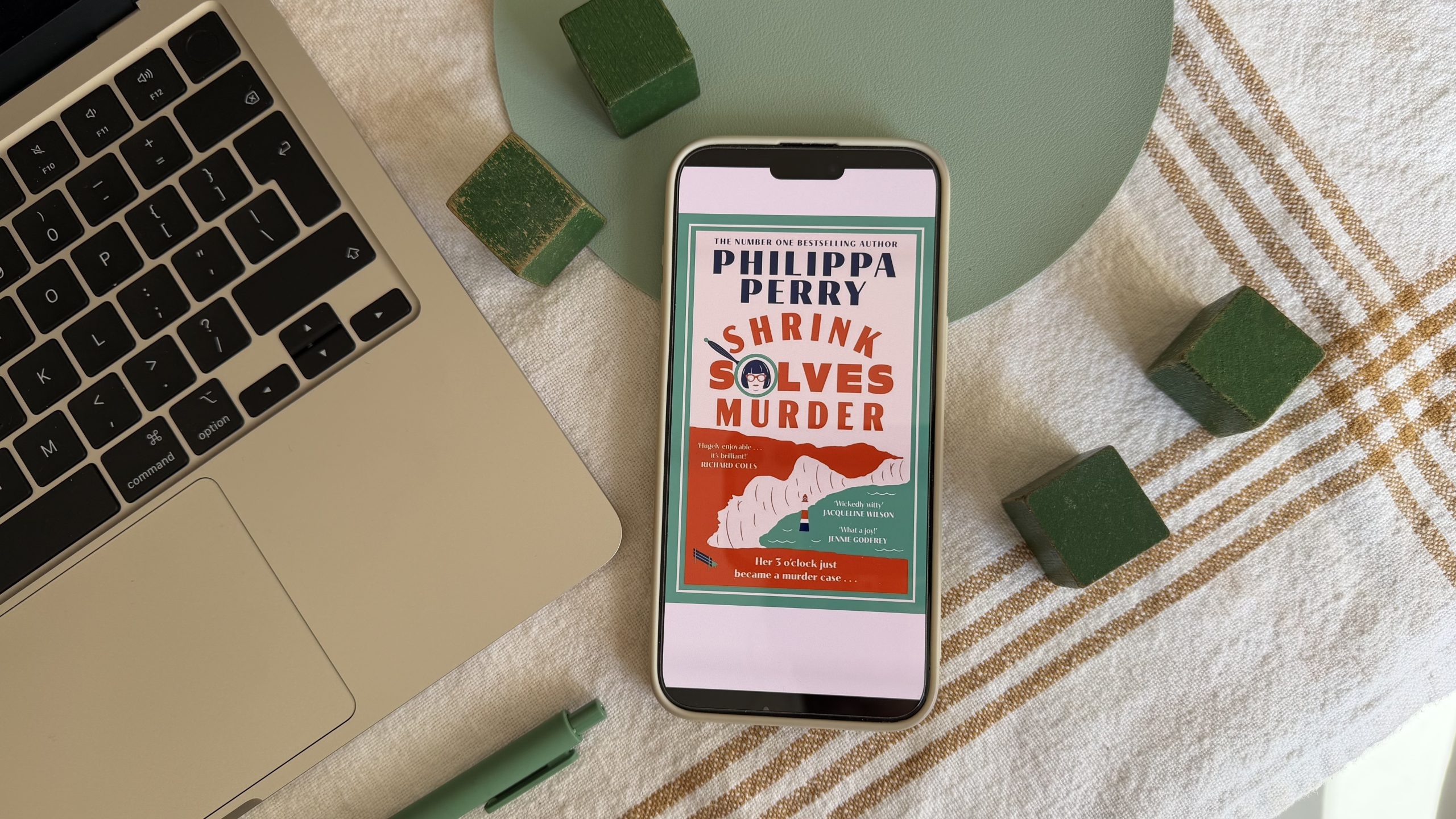
 I’ve been on a bit of a reading roll recently. I do love getting lost in a good book and there are some brilliant books just about to hit the shelves. Today I wanted to tell you about Shrink Solves Murder by Philippa Perry, published yesterday (7th May 2026) by Random House UK.
Shrink Solves Murder by Philippa Perry
Her 3 o’clock just became a murder case…
When a body is found near Beachy Head, the police chalk it up to suicide — a tragic but not uncommon end in these parts.
But local psychotherapist Patricia Phillips isn’t convinced.
The victim? Her three o’clock patient, Henry Clayton.
The cause of death is supposedly self-inflicted. Yet Pat can’t shake the belief that someone wanted Henry Clayton dead. She spends her working life listening to histories and secrets, and she has a nose for when a story doesn’t quite ring true.
Drawn from the therapy room to the crime scene, Pat begins to notice what others appear to overlook.
At her side is her best friend Prichard — a home-brewer of fearsome, stomach-turning concoctions, an excellent cook, and a man who seems to get along with everyone. Which makes him useful for infiltrating village life.
As Pat and Prichard look beneath the village’s thin veneer of normality — one that barely conceals its appetites — they discover a killer hiding in plain sight.
I found Shrink Solves Murder an engaging and surprisingly confident debut novel from Philippa Perry—warm, observant, and very much in the cosy crime tradition, but with a distinctive psychological edge.
What worked especially well for me:
The story’s core idea of a psychotherapist, Patricia “Pat” Phillips, turning amateur sleuth feels authentic rather than gimmicky. Perry’s clinical background gives Pat a believable sensitivity to motive, self‑deception, and the stories people tell themselves.
Characterisation is the book’s real strength. The village ensemble is gently satirical without becoming cartoonish, and Pat’s voice is humane, curious, and quietly stubborn. Psychological insight is woven into the narrative without slowing down the plot.
It’s an easy, comforting read. Wickedly witty in places, but never smug. The book embraces the pleasures of cosy crime: gossip, small communities, hidden resentments, and a puzzle that feels fair to the reader.
Where it may divide readers:
If you’re looking for a dark or technically intricate mystery, this isn’t that. The plot is competent rather than dazzling, and some crime readers may guess the solution early (I didn’t!).
The reflective, therapeutic lens is refreshing, but can sometimes soften the tension. That’s a feature rather than a flaw, but it will depend on taste.
I’d say Shrink Solves Murder succeeds less as a whodunnit tour de force and more as a character‑led, emotionally intelligent crime novel. It feels like Perry is inviting readers into a new genre she clearly enjoys. If you like authors such as Richard Osman or classic village mysteries with modern sensibilities, this is very likely your cup of tea—and it certainly left me curious about a follow‑up novel.
Thanks to NetGalley for an ARC.



Oooh this sounds right up my street! It sounds quite similar to something else I’ve read this year. I’ve saved it on my good reads. Although I’m in a bit of a reading slump at the moment… I really need to get back into reading.
Claire
Ooo this is something I would definitely read , will pop it on my tbr 🙂