
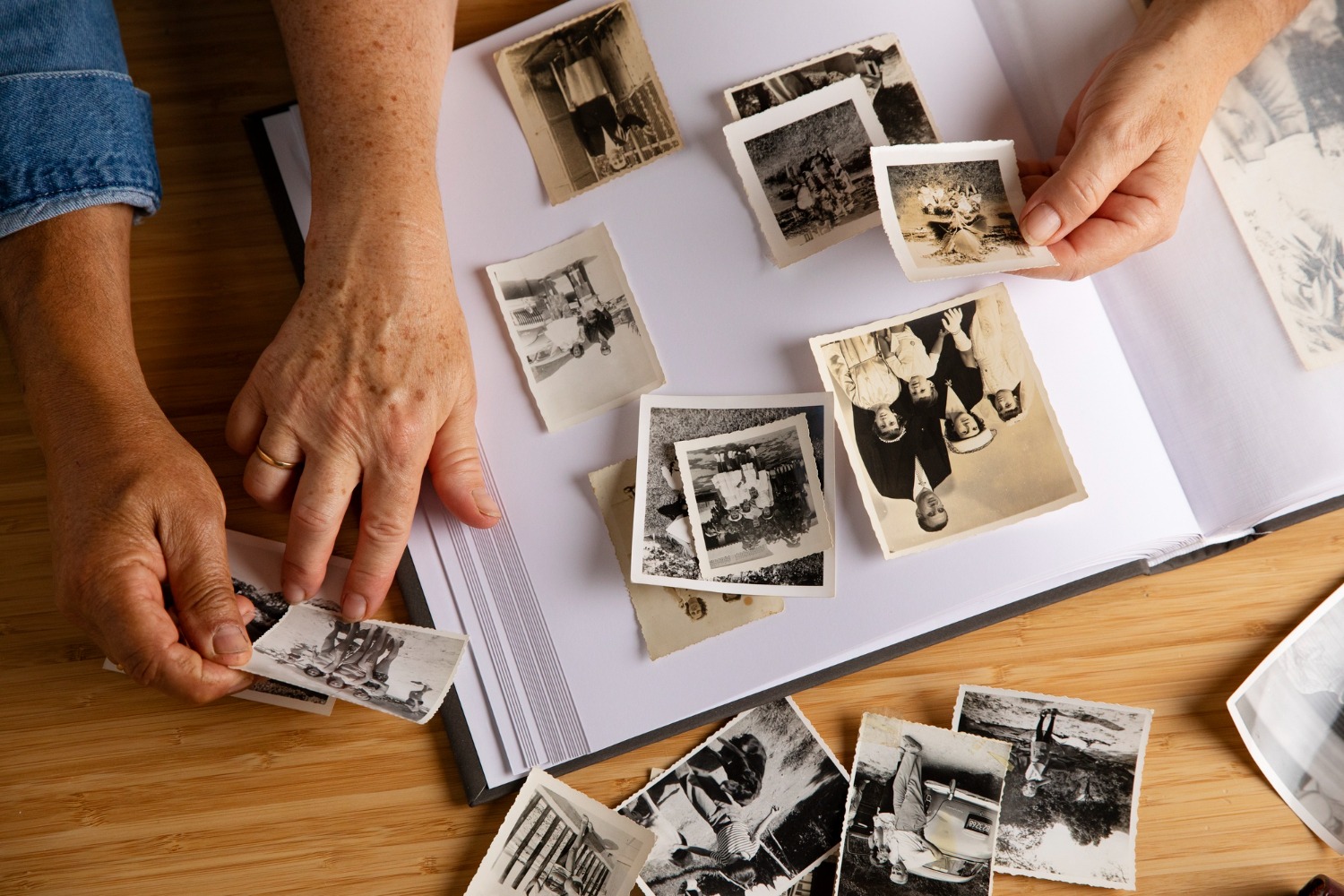
Old family photos rarely sit on display. More often, they end up tucked away in drawers, shoe boxes, or albums on the top shelf. They wait quietly, collecting dust while time keeps moving forward. Yet these pictures hold moments that shaped entire families. A smile that looks familiar. A house that no longer exists. A face everyone remembers, but no longer sees.
As photographs age, they start to disappear in slow ways. Colours fade. Paper cracks. Corners curl. At some point, people realise that if nothing is done, these images may be lost for good. That is usually when the idea of preservation comes up. Thanks to modern tools, old photo restoration is no longer something only professionals can do. Today, restoring family pictures has become far more realistic for everyday households.
Preserving these images is not about perfection. It is about keeping memories visible. When old photos are restored and shared, they stop being forgotten objects and become part of daily life again.
Why restoring old photos really matters
Family photos are more than decorations. They are proof. Proof that people lived, loved, struggled, and celebrated long before today. For many families, especially those with missing records or stories, photos are the only link to earlier generations.
A restored image can spark conversations that would never happen otherwise. Children ask who that person was. Grandparents remember details they thought had gone forever. Suddenly, a faded photograph turns into a shared moment.
There is also a practical reason. Physical photographs are kept on paper which ages badly over time, especially if stored in sub par conditions. Light, moisture, and air slowly damage the prints and waiting longer will result in losing details. Details that no technology can bring back. Acting sooner gives a better chance to restore old photos while there is still enough information left.
Many people also underestimate the emotional impact. Seeing a damaged picture brought back into focus can be surprisingly moving. It feels like recovering something important rather than simply fixing an image.
The most common damage found in family photos
Most old photographs suffer from the same problems. Fading is the most obvious. Blacks turn grey. Whites yellow. Contrast disappears. Scratches and creases appear where photos were handled or folded.
Stains are another issue. Water marks, mould spots, or chemical damage spread slowly across the surface. In worse cases, parts of the image are missing entirely. Edges tear. Faces crack along fold lines.
At first glance, damage like this can feel final. Many people assume nothing can be done. In reality, a surprising amount of detail can still be recovered with the right approach.
Professional restoration: high quality, high cost
Professional photo restoration services can deliver impressive results. Experts scan images carefully and rebuild damaged areas by hand. For rare or historically valuable photos, this option makes sense.
The downside is cost and time. Professional work is often expensive, especially if there are many images. Turnaround times can be long. There is also limited control. Families must trust someone else to make creative decisions about faces, colours, and details.
For most households, professional restoration works best for one or two very important images rather than full collections.
Manual restoration: possible, but demanding
Some people attempt restoration using advanced photo editing software. This involves scanning photos and fixing damage manually. Scratches are removed one by one. Colours are adjusted carefully.
While this gives full control, it also requires skill and patience. These tools are complex. Learning them properly takes time. Mistakes are easy to make, especially with portraits. For many, the process quickly becomes overwhelming.
Digital restoration software: a more realistic solution
Modern restoration software offers a practical middle option. These programs are designed specifically for old photographs. They combine automatic repair tools with simple manual controls.
PhotoGlory focuses on this exact task. After importing a scanned image, the software can remove scratches, repair cracks, and restore contrast in minutes. Faces become clearer. Details return. The result still feels authentic, not artificial.
This approach works especially well for families with many photos. Instead of restoring a single image over several days, entire albums can be processed gradually. That makes restoring old family photos feel manageable rather than exhausting.
Removing Scratches and Creases
With age, prints can develop fine cracks, scratches, and surface folding. Start by selecting the Healing Brush in PhotoGlory. Gently paint over the damaged area, following the direction of the tear or crease. The software will analyze the pixels surrounding the repair and fill in the gap. This is particularly useful for small white spots, dust, or cracks that might appear after scanning.
Correcting Faded Tones
Many photos, after years of exposure to light, can lose their contrast. What used to be a sharp image becomes a grey, muddy mess. Use the Adjustment Brush to lighten the light areas and deepen the dark ones. This will add depth back into the image and it will make the subject pop out from the background again.
Fixing Missing Corners
If a photo is torn or has a missing corner, use the cloning or patch tool. Select a clean area with a similar texture, then carefully copy it over the damaged section. Work in small strokes and check alignment as you go. This approach allows you to reconstruct missing parts while keeping the overall look of the photo consistent.
What digital restoration can realistically achieve
Digital restoration is powerful, but it has limits. Software works best when some image information remains. Large missing areas still require careful reconstruction. No program can perfectly guess what was never captured.
That said, many photos respond far better than expected. Simple contrast correction can reveal faces that seemed lost. Automated tools remove decades of surface damage quickly. With small adjustments, results often look natural and respectful.
The goal is not to make photos look new. It is to make them readable again.
Colourising old photos: when and why
Some families prefer black-and-white images to remain untouched. Others enjoy seeing history in colour, especially when sharing photos with younger relatives.
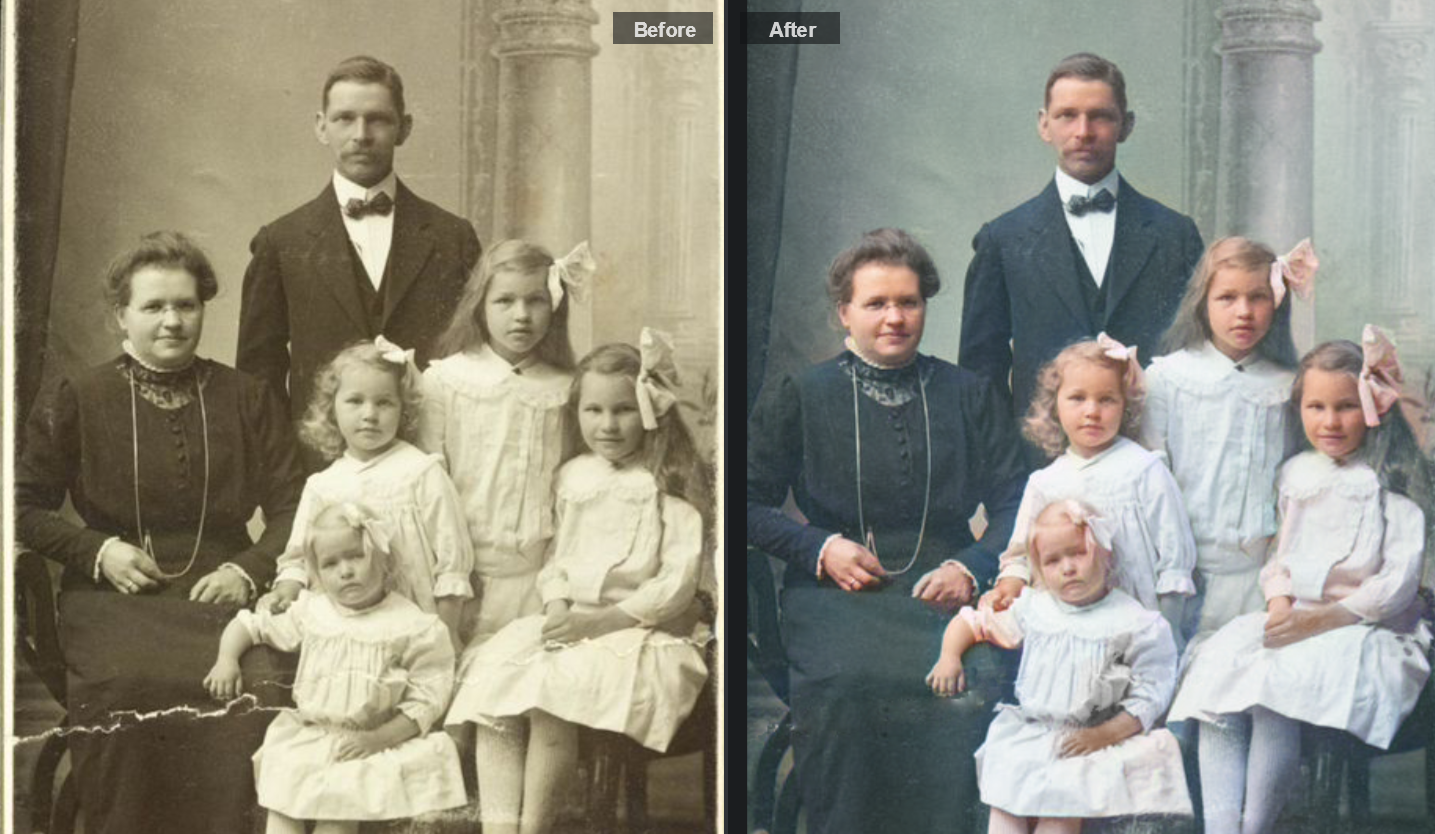
Modern colourisation tools are far more subtle than they once were. Skin tones look realistic. Clothing stays believable. When done carefully, colour adds warmth without changing the mood.
It is always wise to keep the original scan saved separately. That way, future generations can decide how they want to view the image.
Bringing restored photos back into daily life
Once restored, photos no longer need to hide in boxes. Digital copies can be shared with relatives across the country. Prints can be framed or added to new albums.
Some families create digital archives with names and dates. Others use restored photos in memory books, family trees, or personal gifts. Clear images make these projects far more meaningful.
When photos are visible, stories stay alive.
Getting started without pressure
Restoration usually begins with scanning. Clean hands, flat placement, and good resolution matter more than expensive equipment. Once scanned, images are protected from further physical damage.
Choosing the right restoration method makes the process smoother. For most families, modern software offers the best balance of control, quality, and cost. It allows people to restore old pictures at their own pace, without specialist training.
Restoring family photos is not about chasing perfection. It is an act of care. Each repaired image keeps a moment from slipping away.
A quiet way to protect family history
Every family has moments worth keeping. Old photos are often the only record of them. Letting them fade happens easily. Preserving them takes intention, but the reward lasts.
Restored images help younger generations understand where they come from. They give older relatives comfort and recognition. In the end, photo restoration is not only about the past. It is about keeping family history present, visible, and shared.



I have so many old family photos. These are great tips for looking after them.
This is exactly the kind of photo problem that benefits from a careful digital workflow. Old family prints often have two separate issues: physical fading from age and digital pixelation after scanning or sharing. I like the idea of preserving the story first, then improving clarity without making the photo look artificial. That is also the direction we take with FixPixelatedPhotos. Do you usually recommend scanning at a higher resolution before any AI restoration step?